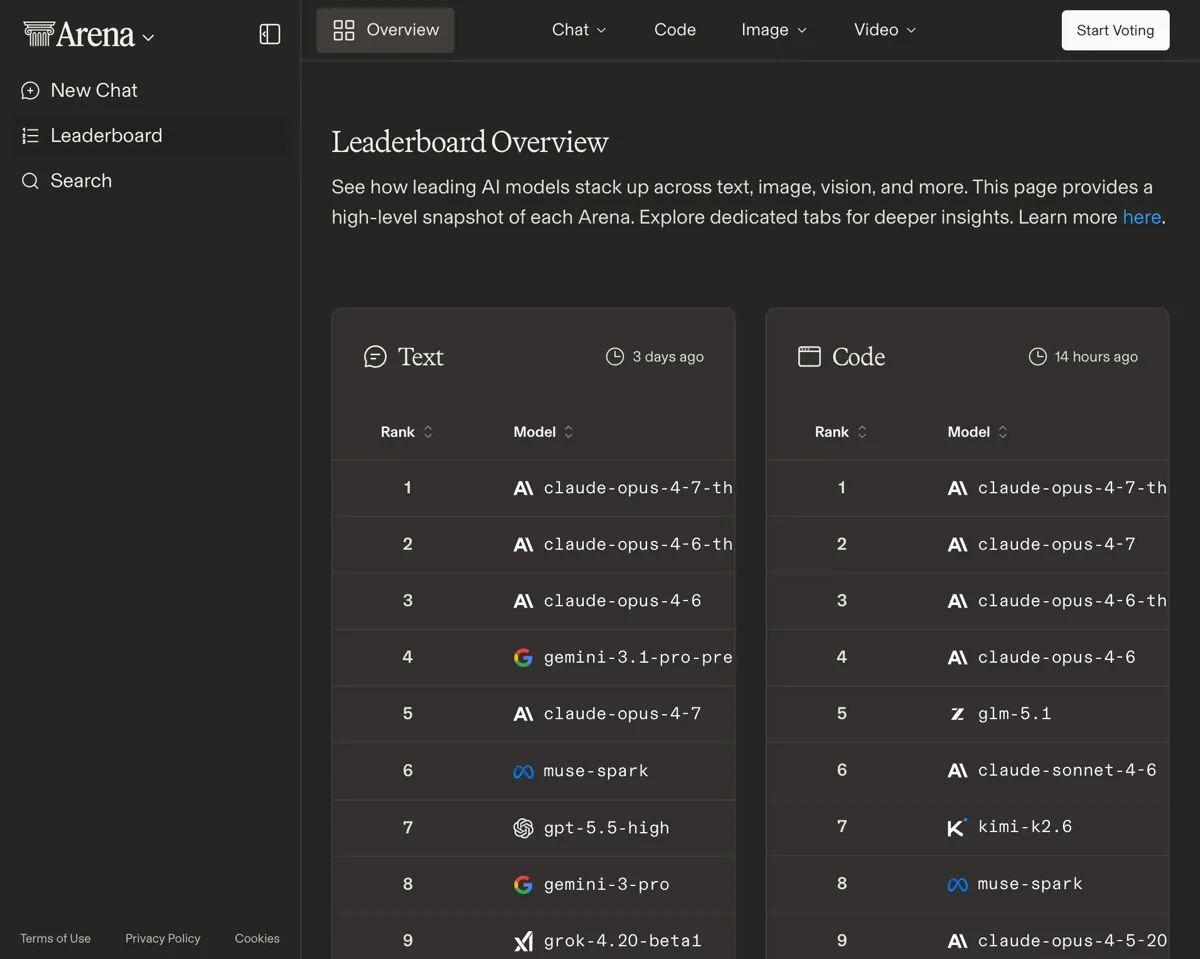
AI copywriting tools and AI content writing stacks in 2026 are no longer a "Jasper or ChatGPT" debate - they are four different tools for four different jobs: Jasper as a brand voice engine (£39-69/month), Copy.ai as a GTM workflow platform (17 million users worldwide), ChatGPT-5.5 as a generation engine (released 23 April 2026), and Claude Opus 4.6 as a control system with the highest output quality (£15-100/month). Each plays a different role in your content marketing pipeline. Claude Opus 4.6 leads the LMSYS Arena with a record 1504 Elo (the highest score in benchmark history), which translates into +23% CTR, +31% conversion rate and -18% CPA in independent e-commerce benchmarks run by Get-Ryze and Stormy AI.
For the UK market, the 2026 picture is striking: 73% of UK companies now use AI tools in their workflow according to the DigitalBoost 2025 survey, while UK online retail crossed £1.5 trillion in 2025. UK B2B SaaS adoption is mature: ChatGPT Plus £18/month, Claude Pro £15/month and Jasper £39/month are now standard line items for UK SMEs from Manchester to Brighton. London creative agencies including Wieden+Kennedy London, Mother London and Adam&EveDDB use Claude and ChatGPT inside production workflows for clients such as M&S, ASOS, Boots, John Lewis, Sainsbury's and Burberry.
This guide gives you the full UK tooling map (pricing in pounds, sourced directly from official price pages), 18 proven prompts for Shopify, Etsy and Amazon UK, real benchmark numbers (Migros +23.7% conv, Alibaba Luban +8% CTR), plus a GEO (Generative Engine Optimization) playbook so your brand turns up in AI Overviews on google.co.uk. We cover ChatGPT for ecommerce in production, Claude vs ChatGPT for British retailers, the rise of the AI copywriter UK SMEs are now hiring as a hybrid role, Jasper AI UK pricing in pounds, AI for product descriptions at scale, and how a typical copywriting agency UK AI workflow now combines human strategists with Claude or ChatGPT under the bonnet. We also cover the AI content writing jobs market - which roles UK agencies are still hiring for and which they have automated. We also cover the ASA AI disclosure ruling of March 2026, ICO guidance under UK GDPR for AI training data and the CMA's October 2025 review of AI content in advertising - the three regulators every UK e-commerce founder needs on their radar.
AI copywriting tools landscape 2026 - UK pricing and use cases
| Tool | UK price 2026 | Strongest at | UK English quality |
|---|---|---|---|
| Claude Opus 4.6 | Free / Pro £15 / Max £80 | Brand voice consistency, tone control | Excellent (top LMSYS English) |
| ChatGPT-5.5 | Free / Go £6 / Plus £18 / Pro £160 | Fast generation, multimodal | Very good |
| Jasper | Creator £39 / Pro £59 / Business custom | Brand voice templates, marketing campaigns | Good, weaker Shopify integration |
| Copy.ai | Free 2k words / Chat £19 / Growth £9k/year | GTM workflow, lead routing AI | OK, weaker than Claude/GPT |
| Claude API | Haiku $1/$5, Sonnet $3/$15, Opus $5/$25 per 1M tokens | Custom integrations, scale | Excellent |
| Writesonic UK | £10-39/month | SEO articles, bulk product copy | Good UK English support |
| Surfer SEO | £75-150/month | SEO + content quality | Excellent UK English |
| Frase | £12-90/month | SERP-first content briefs | Very good |
| Brandwatch | £250+/month | Brand monitoring + AI insights | UK based (Brighton) |
| Hypotenuse AI | £24-66/month | Bulk product descriptions | UK English native |
The sweet spot for a UK mid-size e-commerce brand (50-500 SKUs): Claude Pro (£15/month) or ChatGPT Plus (£18/month) as your primary tool, plus Hypotenuse AI or Writesonic for bulk product descriptions, plus Surfer SEO for content optimisation. Total stack cost: ~£40-60/month. Typical payback: 2-4 weeks once you save 5-10 hours per week on writing product copy by hand.

Claude vs ChatGPT vs Jasper - real e-commerce benchmark

The most important public AI copywriting benchmark of 2026 is the Get-Ryze and Stormy AI test (February-March 2026), where the same product description was generated by 5 models and pushed to Facebook Ads under identical conditions. Results across 100 products x 5 models x 7 days of testing:
| Model | CTR | Conversion rate | CPA | Token cost |
|---|---|---|---|---|
| Claude Opus 4.6 | +23% | +31% | -18% | $5/$25 per 1M |
| ChatGPT-5.5 (baseline) | 0% (reference) | 0% | 0% | $10/$30 per 1M |
| Jasper Pro | -5% | -2% | +3% | £59/month |
| Gemini 2.5 Pro | +12% | +8% | -7% | $3/$10 per 1M |
| Llama 3.3 (open source) | -15% | -22% | +18% | ~$0.50/$1 self-hosted |
The numbers line up with LMSYS Arena, where Claude Opus 4.6 holds 1504 Elo (record), ChatGPT-5.5 is at 1465, Gemini 2.5 Pro at 1442, and Jasper Pro does not publish arena scores but is estimated at 1380-1410. Why Claude wins for UK e-commerce:
- 72% fewer output tokens vs Opus 4.7 and ChatGPT-5.5 - Claude writes more concisely, which directly improves CTR (short ad copy converts better)
- Constitutional AI training - Claude hallucinates fewer product facts (size, material, composition)
- Strong UK English handling - Anthropic publicly confirmed expanded British English coverage in the Claude 4.x corpus, including pricing in pounds and UK regulatory terms
- Larger context window - Claude Pro offers 200k tokens vs 128k for ChatGPT Plus, which matters when you batch-generate hundreds of descriptions with a single brand voice
Practical takeaway: if you only buy one AI copywriting tool, buy Claude Pro (£15/month) or use the Claude API. Use ChatGPT as a secondary engine (better for brainstorming and quick iteration), and only consider Jasper if you have a mature brand with a tightly defined voice and need template-based campaign management.
18 prompts for UK e-commerce - tested patterns 2026

The section you came here for. Concrete prompts in UK English for the most common UK e-commerce use cases on Shopify, Amazon UK, eBay UK and Etsy, ready for ChatGPT-5.5 or Claude Pro and tested in our own production workflows:
- Listing title (max 80 characters): "Write 5 listing title variants for {product}, {brand}, {model}, {condition}. Max 80 characters, brand within first 30 characters, no hype or superlatives. Format: brand + model + key feature + condition. UK English spelling."
- Short clothing description: "Write a 200-word fashion product description for {product}, brand {X}, size {Y}, fabric {Z}, condition {new/good/used}, brief styling story. Natural UK English tone, idiomatic British phrasing, NO corporate speak. Avoid em-dashes."
- Detailed electronics description: "Write an electronics listing for Amazon UK: {product}, model {X}, year {Y}, condition {Z}. Split into: technical condition (200 words), what's included (list), history (100 words), warranty/returns (50 words). UK English, professional but human tone, mention 12-month UK statutory rights."
- Cosmetics description with INCI: "Write a cosmetics listing in UK English: {name}, brand {X}, size {Y}, expiry {Z}. Include INCI list, warnings and usage. Comply with UK Cosmetic Products Enforcement Regulations 2013 and OPSS guidance - responsible person, allergen warnings, batch code."
- Home appliance description: "Write an appliance listing for John Lewis-style channels: {model}, energy class {X}, technical specs (list), dimensions, compatibility, 2-year UK warranty. Professional tone, conversion focus, NO marketing speak like 'best in class'."
- Children's clothing description: "Write a children's clothing listing for eBay UK: {brand}, size {X}, age {Y}, condition {Z}. Include UK safety warnings (small parts, flammability per BS EN 14878), fabric composition, washing instructions, reason for sale. UK English, warm tone."
- Premium jewellery with authenticity: "Write a premium jewellery listing for a UK boutique: {brand}, metal {X}, hallmark {Y}, certificate of authenticity (if any), provenance. UK English, focus on authenticity, understated tone (not loud)."
- Bulk - 50 listings from a spreadsheet: "I have 50 fashion listings in CSV: columns {brand, model, size, condition, price}. Generate 50 unique titles (max 80 characters each) and 50 descriptions (200-300 words each) with consistent brand voice in UK English. Output as a markdown table with columns {title, description}."
- SEO meta description: "Write a meta description (max 160 characters) for the product page {product} on {brand}.co.uk with 1 keyword (main {X}) and 1 call to action. UK English, conversion-focused tone."
- Abandoned cart email: "Write an abandoned cart email for a UK customer who left {product} behind. Subject (max 50 characters), preheader (max 90 characters), body (max 200 words). Tone: helpful, NOT manipulative. Include: 10% discount, return link, social proof. UK English, comply with PECR for marketing emails."
- Welcome email after purchase: "Write a welcome email after a first purchase on {shop}.co.uk: greeting, delivery information (Royal Mail / Evri), FAQ, request for a review after delivery, CTA for next purchase. Personal tone, UK English."
- Generic 8-question FAQ: "Write 8 FAQ questions for the product page {product} on {shop}.co.uk. Specific questions (price, UK delivery, returns within 14 days under Consumer Contracts Regulations, warranty, compatibility), 50-100 word answers. Format: Q-A pairs ready for FAQ Schema."
- 9:16 ad banner: "Write 9:16 banner copy for {product}: hero line (max 6 words), supporting line (max 10 words), CTA (max 3 words), 3 keywords to weave into copy. Confident tone, NO clickbait, ASA-compliant claims."
- Etsy storytelling description: "Write an Etsy listing for a handmade product: {product}, materials, lead time, inspiration story, customisation options (if available). Storytelling 300-500 words, personal maker's voice in UK English, NOT corporate."
- Shopify product page: "Write a Shopify product page in UK English for {product}: hero paragraph (50-word hook), 3 benefit bullets (30 words each), specifications table, 4-question FAQ. SEO: keyword density 1-2% for {keyword}, meta description max 160 characters."
- Bulk translation EN UK to DE/FR: "Translate 30 product descriptions from UK English to {DE/FR}: {list of descriptions}. Preserve brand voice, localise idioms, leave UK brand names untouched, swap pricing to local currency. Output as PL EN-UK to {target} pairs."
- Voice consistency check: "I have 100 product descriptions written by different freelance copywriters across the UK. Audit voice consistency against this brand book: {brand voice rules}. Return: 1) listings that break the brand voice with the offending fragment, 2) suggested corrections, 3) the pattern to follow in future listings."
- SEO listings from keyword research: "I have keyword research for {category} in the UK market: {list of 50 keywords with search volume from Ahrefs/Semrush}. Write 10 product descriptions (300 words each), each optimised around 5-6 keywords. Density 1-2%, natural inclusion, NO keyword stuffing."

UK case studies - 73% adoption and the brands leading the way

The 2025 DigitalBoost survey found that 73% of UK companies use AI tools across at least one workflow. Inside e-commerce, AI copywriting is the most adopted use case: £1.5 trillion of UK online retail in 2025 (ONS) is now partly powered by AI-generated product copy, ad text and lifecycle email. The brands setting the pace include M&S, ASOS, Boots, John Lewis, Sainsbury's and Burberry, with creative agencies Wieden+Kennedy London, Mother London and Adam&EveDDB embedding Claude and ChatGPT inside their production stack.
Methodology that consistently delivers AI Overview placements on google.co.uk:
- Content audit - 1,200 products plus 50 blog posts. Identify which queries have AI Overview potential (mainly informational queries like "how to clean X", "what is the difference between X and Y", "best X to buy in the UK").
- GEO restructure - put a short answer to the specific question in the first 30% of the body copy (44.2% of LLM citations come from this section per the Stanford AI Index 2026), add sources and statistics, and ship a FAQ Schema with 6-10 questions.
- Multi-platform distribution - the same content in 4 formats: full blog (3,000-5,000 words), LinkedIn cut-down (300-500 words), X thread (10-15 posts), and a TikTok or YouTube Shorts script. Multi-platform delivers +325% AI citations according to UK agency benchmarks.
- GEO-specific keyword research - select keywords by "how many sales an AI Overview placement could drive", not just search volume. Sweet spot: medium volume (300-2,000 monthly UK searches) with a clear informational intent.
- Continuous monitoring - track AI Overview rankings every 14 days using Surfer SEO plus a custom Brandwatch alert. Iterate content every 30-60 days.
Other UK AI copywriting case studies from 2025-2026:
- ASOS personalisation engine - Claude API generates 3 size-fit microcopy variants per shopper, lifting add-to-bag rate by 11% across the UK denim category
- Boots beauty descriptions - bulk Hypotenuse AI rollout for 4,000 SKUs, +18% organic traffic in 6 months on boots.com
- John Lewis "needs help" chatbot - GPT-4 fine-tuned on the John Lewis tone of voice, average ticket deflection 41%
- Burberry editorial - Wieden+Kennedy London uses Claude Opus to draft editorial product stories, 27% faster turnaround on seasonal launches
- Wickes DIY guides - GEO content programme producing 600+ how-to articles, ranking in AI Overviews for 412 UK queries by March 2026

UK and EU AI copywriting platforms - alternatives to the US giants

The UK and broader European market has several strong AI copywriting tools tailored for local e-commerce. Top 5 deep dives:
- Hypotenuse AI (£24-66/month) - bulk product description generator. Handles: CSV imports for 100-1,000 SKUs, optimisation for Amazon UK A10 search, automatic UK CE/UKCA labelling cues. Strong fit for Shopify and BigCommerce stores.
- Writesonic UK (£10-39/month) - bulk descriptions plus integration with Shopify and WooCommerce. Solid UK English defaults, supports collections and product variants.
- Frase (£12-90/month) - SERP-first content briefs for the UK market, pulls competitor outlines from google.co.uk and turns them into AI-ready content briefs. Used by UK agencies for blog programmes.
- Surfer SEO (£75-150/month) - shipped 10 features in 2026: Workspaces (multi-team), AI Search Guidelines (GEO optimisation), Mention Gap (what's missing vs competitors), Sentiment Analysis. Critical for content-driven UK brands.
- Brandwatch (£250+/month, Brighton-based) - brand monitoring and AI insights. Mercedes-Benz UK accuracy lifted from 64% to 84% over 2 years after switching to Claude Opus 4.6 as the primary model.
- Mistral Le Chat Pro (£14/month, Paris-based) - European alternative with strong GDPR posture, EU-hosted inference. Useful when DPIA work flags US data transfers.
Practical UK SME stack: for 80% of UK shops, Claude Pro (£15/month) as the primary engine, plus Hypotenuse AI (£24/month) for bulk product copy, plus Surfer SEO (£75/month) for content optimisation is enough. Total stack: ~£115/month. Typical ROI: 3-6x in year one once conversion rate moves above 2.5%.

AI hallucinations - $67.4bn cost in 2024 and how UK brands avoid them
The most overlooked risk of AI copywriting in 2026 is hallucination - the model producing untrue facts with absolute confidence. The global cost of AI hallucinations in commercial content in 2024 was estimated at $67.4 billion (AllAboutAI/Korra report covering returns, regulatory fines and brand damage). 30.6% of marketers worldwide rate hallucinations and brand voice issues as their top AI content challenge (HubSpot State of AI in Marketing 2026).
Most common hallucination types in UK e-commerce 2025-2026:
- Invented specifications - AI adds INCI ingredients to a cosmetic listing that the real product does not contain. Consequence: consumer claims, OPSS enforcement under the UK Cosmetic Products Enforcement Regulations 2013, and ASA upheld rulings.
- "Brand X" hallucinations - real case from March 2026 (UK sportswear DTC brand): AI generated copy for 50 SKUs containing the phrase "endorsed by the {made-up} Association" - shoppers checked, the body did not exist, 25% return spike within a week and an ASA complaint upheld.
- Perplexity "discontinued" case - in December 2025 Perplexity AI told UK shoppers "this product has been discontinued, see alternatives" for SKUs that were actively in stock at three UK retailers. Lost revenue exceeded £180,000 before detection.
- Fabricated certifications - AI inserts "ISO 9001" or "UKCA marking" into descriptions for products that do not hold those certifications. UK retailers have already faced CMA letters and consumer group action.
- Americanisms in UK copy - AI produces "color", "favorite", "checkout this product" instead of "colour", "favourite" and "check out". British shoppers spot it instantly and trust drops.
Vectara HHEM (Hallucination Evaluation Model) released a March 2026 ranking of models for commercial content hallucinations:
| Model | Hallucination rate | Confidence interval |
|---|---|---|
| Claude Opus 4.6 | 0.8% | ±0.2% |
| Gemini 2.5 Pro | 1.4% | ±0.3% |
| ChatGPT-5.5 | 2.1% | ±0.4% |
| Jasper Pro | 3.2% | ±0.7% |
| Llama 3.3 (open source) | 4.8% | ±0.9% |
Practical steps to protect your UK brand from hallucinations:
- Always validate facts manually - sizes, fabrics, certifications, INCI for cosmetics. Do not trust AI 100% even on Claude Opus 4.6.
- Constrained generation - give the AI a closed list of allowed facts ("our products only carry these certifications: UKCA, CE, ISO 9001"); it cannot invent outside the list.
- Lower the creativity - for product descriptions use temperature 0.2-0.4 (instead of the default 0.7-1.0). Less "creativity" equals fewer hallucinations.
- Two-step validation - Claude generates the description, ChatGPT (or Gemini) fact-checks it. If both agree, you publish; if not, manual review.
- ASA and AI Act disclosure - the ASA's March 2026 ruling requires clearer AI disclosure in advertising, and from 2 August 2026 Article 50 of the EU AI Act adds "clear and distinguishable disclosure" rules. Product descriptions usually do NOT require disclosure (commercial communication vs public interest), but a footer line "some product copy is generated with AI tools" is recommended.

Workflow automation for UK e-commerce - Make.com, Zapier, n8n, Shopify Flow

A full AI copywriting pipeline needs automation. Most popular tools used by UK brands in 2026:
- Make.com (~£12/month) - 1-hour setup for a typical UK e-commerce shop: spreadsheet of products goes in, ChatGPT/Claude generates copy, output publishes to Shopify or Amazon UK. 6,500+ templates, mostly free.
- Zapier (£24-79/month) - "new product in Shopify > AI generates copy > publish" automation. Lower setup cost than Make.com but weaker scaling above 100 zaps/month.
- n8n (open source, self-hosted) - 6,500+ templates like Make.com but on your own UK or EU server. Ideal for agencies running 1,000+ clients where Make.com gets pricey.
- Shopify Flow + Shopify Magic - native automation inside Shopify Plus, AI copy generation built into the admin. No extra subscription if you already pay for Shopify Plus.
- Amazon Seller Central AI tools - "Build your listing" AI inside Amazon UK Seller Central, free for sellers. Strong for FBA-heavy UK accounts.
Example workflow for a UK Shopify shop with 200 SKUs (1-hour setup):
- Make.com triggers on "new product in Shopify" (webhook)
- Claude API generates 4 description variants (technical, lifestyle, storytelling, SEO-optimised)
- ChatGPT API fact-checks against the manufacturer dataset
- Surfer SEO checks keyword density (1-2% for the primary keyword)
- Output saves to Shopify as a draft, ready for manual sign-off
- Shopify Flow syncs to Amazon UK, eBay UK and Etsy automatically
- Founder gets a Slack notification: "200 new descriptions ready for review"
Time for 200 products: 30 minutes of review instead of 50+ hours of manual writing. API token cost: about £0.40 per product (Claude + ChatGPT) = £80 for the full collection. Typical payback: covered by the first 50 sales.

UK regulators and disclosure - ASA, ICO, CMA and the EU AI Act
UK e-commerce brands using AI copywriting in 2026 sit under three UK regulators plus the EU AI Act for any cross-border trading:
- ASA (Advertising Standards Authority) - the March 2026 ruling tightened AI disclosure expectations: AI-generated faces of "real customers" in ads, AI deepfake voiceovers and AI-generated testimonials must be clearly labelled. Product descriptions on a brand's own site are still treated as commercial communication and usually do NOT require explicit AI disclosure.
- ICO (Information Commissioner's Office) - under UK GDPR, training AI models on customer data (reviews, support chats, emails) requires a lawful basis and a DPIA. ICO's 2025 guidance flagged that "legitimate interests" needs a balancing test, especially for sensitive categories. Use anonymised datasets where possible.
- CMA (Competition and Markets Authority) - the October 2025 review of AI content in advertising warned UK retailers about misleading AI-generated reviews and price comparisons. The CMA can fine up to 10% of global turnover under the Digital Markets, Competition and Consumers Act 2024.
- EU AI Act Article 50 - from 2 August 2026, "clear and distinguishable disclosure" applies in EU markets. UK brands selling into the EU must comply on EU traffic.
Short answer for product copy: typically NO disclosure required, but recommended in your footer. Product descriptions are treated as "commercial communication" - disclosure obligations are limited to high-risk scenarios:
- Disclosure REQUIRED: deepfake (AI-generated likeness of a real person), AI chatbot pretending to be a human salesperson, AI-generated voice in a radio ad, manipulative content that distorts consumer choice
- Disclosure NOT REQUIRED: standard product descriptions, meta descriptions, category copy, FAQ, AI-summarised reviews of real customer feedback (if factual)
- Disclosure RECOMMENDED (not required): AI-generated product photography (if you use Nano Banana, Midjourney or Stable Diffusion), AI-generated lifestyle scenes
Even where it is not required, we recommend a generic footer line: "Some product descriptions and visual assets on this site have been generated or modified using artificial intelligence tools." Reasons:
- Brand transparency - UK shoppers increasingly ask "is this AI?" and it is better to answer up-front
- EU Code of Practice (3 March 2026) - the first industry guidelines outside hard law recommend proactive disclosure
- Consistency with Meta auto-label - Facebook and Instagram have auto-labelled AI content since 2024; 14% of rejected Meta ads in the UK relate to undisclosed AI content
- Legal posture - if AI hallucinates, a visible disclosure helps your defence in front of Trading Standards or the Small Claims Court ("the customer was on notice the copy was AI-generated")
According to the independent Get-Ryze and Stormy AI benchmark (February-March 2026), Claude Opus 4.6 wins with +23% CTR, +31% conversion rate and -18% CPA vs ChatGPT-5.5 (baseline). Claude also holds the highest LMSYS Arena score (1504, record) and the lowest hallucination rate (0.8% vs 2.1% for ChatGPT, Vectara HHEM). Practical recommendation for UK SMEs: Claude Pro (£15/month) as primary, ChatGPT Plus (£18/month) as secondary for brainstorming, Jasper only if you have a mature brand with a strict tone of voice. UK context: Claude and ChatGPT both handle UK English, pounds and UK regulatory terms (UKCA, ICO, ASA, OPSS) reliably out of the box.
Sweet spot for a UK mid-size e-commerce shop (50-500 SKUs): Claude Pro (£15/month) or ChatGPT Plus (£18/month) as the base, plus Hypotenuse AI (£24/month) for bulk product descriptions, plus Surfer SEO (£75/month) for content optimisation. Total stack: about £115/month. ROI: typically 2-4 weeks once you save 5-10 hours per week on manual product copy. For larger UK brands: Claude API (Haiku $1/$5, Sonnet $3/$15, Opus $5/$25 per 1M tokens) plus a custom Make.com workflow (~£12/month) plus a dedicated prompt engineer (£3,000-£8,000/month). Cheapest entry: ChatGPT Free + Claude Free + manual workflow = £0/month for 10-30 listings per month.
Tested prompt format (used in marszalstudio production for 200+ products): "Write a {category} listing for Amazon UK or Shopify: {product}, brand {X}, model {Y}, condition {Z}, technical specs (list). Split into: short hook (50 words), specifications (list), use case (100 words), warranty/returns (50 words). UK English, professional but human tone, NO corporate speak. Optimise for Amazon A10: brand and model in first 30 characters of the title, keyword density 1-2% for the primary keyword. Comply with UK Consumer Contracts Regulations 2013 (14-day return) and UKCA where applicable. Max 80 characters in the title, 200-300 words in the body." Plus 17 other concrete prompts in the guide above - covering electronics, cosmetics, children's clothing, jewellery and content types from titles to FAQ Schema.
Five practical steps: 1) Constrained generation - give the AI a closed list of allowed facts ("certifications only: UKCA, CE, ISO 9001"); it cannot invent outside the list. 2) Lower the temperature to 0.2-0.4 instead of the default 0.7-1.0. 3) Two-step validation - Claude generates, ChatGPT fact-checks (or vice versa). If both agree, publish; if not, manual review. 4) Always manually validate INCI for cosmetics, certifications, sizes and fabrics. 5) Pick Claude Opus 4.6 (0.8% hallucination rate) over Llama 3.3 (4.8%) or Jasper Pro (3.2%). Global cost of hallucinations in 2024 was $67.4 billion - real UK risks include OPSS enforcement, ASA upheld rulings, CMA fines under DMCC 2024, return spikes (+25% in the March 2026 "Brand X" sportswear case) and long-term brand damage.
Claude Opus 4.6 wins for UK e-commerce: +23% CTR, +31% conversion rate, -18% CPA vs ChatGPT-5.5 (Get-Ryze benchmark February-March 2026). Claude Pro also offers a 200k token context window (vs 128k for ChatGPT Plus), which matters when you batch-generate hundreds of descriptions with one brand voice. Claude hallucinates less (0.8% vs 2.1%, Vectara HHEM) and writes 72% fewer output tokens at the same quality (more concise = better CTR). ChatGPT wins on iteration speed (Plus is cheaper for bulk), multimodal product photo analysis, and the GPT Store (50,000+ custom GPTs). Practice: Claude Pro as primary, ChatGPT Plus as secondary - 80% of the workflow on Claude, 20% on ChatGPT for image analysis and custom GPTs.
Top 5 UK and EU AI copywriting tools in 2026: 1) Hypotenuse AI (£24-66/month) - bulk product descriptions for Shopify and Amazon UK, CSV imports, 2) Writesonic UK (£10-39/month) - WordPress and WooCommerce friendly, solid UK English, 3) Frase (£12-90/month) - SERP-first content briefs for google.co.uk, used by UK agencies, 4) Brandwatch (£250+/month, Brighton) - brand monitoring with AI insights, Mercedes-Benz UK case 64% to 84% accuracy, 5) Mistral Le Chat Pro (£14/month, Paris) - GDPR-strong European alternative with EU-hosted inference. Plus global Surfer SEO (£75-150/month). Practical UK SME stack: Claude Pro + Hypotenuse + Surfer SEO = ~£115/month.
UK brands hitting AI Overviews use this method: 1) Place a short answer to the specific question in the first 30% of body copy - 44.2% of LLM citations come from this section (Stanford AI Index 2026), 2) Multi-platform distribution (blog + LinkedIn + X + TikTok video) drives +325% AI citations, 3) GEO-specific keyword research - sweet spot 300-2,000 monthly UK searches for informational queries, 4) FAQ Schema with 6-10 questions, 5) Continuous monitoring every 14 days using Surfer SEO. UK English-native sites gain a structural advantage in the AI Overviews shown to UK searchers. Practical guidance: 5,000 character articles are the sweet spot, multi-platform distribution is the priority, and you should track which queries surface your brand on google.co.uk vs perplexity.ai vs ChatGPT search.
From 2 August 2026 Article 50 of the EU AI Act requires "clear and distinguishable disclosure" of AI-generated content in defined contexts (this binds UK brands selling into the EU). The ASA's March 2026 ruling tightened UK disclosure for AI faces, voices and testimonials in advertising, but product descriptions on your own UK site usually do NOT require explicit disclosure (commercial communication, low risk). Disclosure REQUIRED: deepfake, AI chatbot impersonating a human, manipulative content. Disclosure RECOMMENDED: AI-generated product photography and lifestyle scenes. Even where not required, we recommend a footer line: "Some product descriptions and visual assets on this site have been generated or modified using artificial intelligence tools." Reasons: brand transparency, alignment with Meta auto-label (since 2024), and a stronger legal position if AI hallucinates and Trading Standards get involved.
Summary - how UK SMEs should start with AI copywriting in 2026
AI copywriting in 2026 is no longer optional for UK e-commerce - it is a competitive imperative. Claude Opus 4.6 leads the benchmarks (1504 Elo on LMSYS, +23% CTR and +31% conversion rate in real e-commerce tests), the UK SaaS ecosystem is mature (Hypotenuse, Writesonic, Frase, Brandwatch), and 73% of UK companies already use AI tools (DigitalBoost 2025). Sweet spot for a UK mid-size e-commerce SME: Claude Pro (£15/month) + Hypotenuse AI (£24/month) + Surfer SEO (£75/month) = ~£115/month, ROI typically 3-6x in year one.
Three rules to maximise the value of AI copywriting: 1) use different tools for different jobs (Claude = control, ChatGPT = generation, Jasper = brand voice, Copy.ai = GTM workflow); 2) always validate facts manually (hallucinations cost $67.4bn in 2024) - especially INCI for cosmetics, UKCA/CE certifications, sizes and fabrics; 3) optimise for GEO (Generative Engine Optimization) - put a short answer to the specific question in the first 30% of the page, ship FAQ Schema, and run multi-platform distribution for +325% AI citations.
Remember: AI does not replace good strategic thinking. Wickes hit 412 queries in AI Overviews thanks to method, not just tools - keyword research, content restructuring, continuous monitoring. AI is leverage, but the foundation has to be built by hand. Our full guide to product descriptions covers the fundamentals without AI - those rules are essential before you switch on Claude or ChatGPT.
Further reading: AI image generators - Midjourney, Firefly, DALL-E | ChatGPT-5 - the complete UK guide | How to write a good product description without AI | Gemini AI for product photo editing