
The AI video generator market in 2026 looks completely different than it did 12 months ago. OpenAI has announced the shutdown of Sora 2, retiring the most popular Sora AI video generator route: the consumer app stops working on 26 April 2026, and the API will be switched off on 24 September 2026 (confirmed by OpenAI Help Center). At the same time, the Google AI video generator Veo 3.1 took the lead in the quality benchmark with a score of 9.07/10 (source: aimagicx.com April 2026), Kling 3.0 Omni introduced native 4K at 60 FPS, and Chinese competitors (Seedance 2.0, HappyHorse) muscled their way onto the artificialanalysis.ai leaderboard podium. Looking for the best AI video generator, a free AI video generator or an AI image to video generator free of cost? This guide explains what works in May 2026, what it costs and which tool fits your shop.
The market figures explain the buzz. According to VividEO Stats 2026, deploying AI video in e-commerce delivers an average +27% lift in add-to-cart, +156% engagement and a 91% reduction in production cost ($4,500/min drops to $400/min). Hard numbers: ASOS shortened single product card production from 11 days to 48 hours, cut photography costs by 35% and lifted CTR by 18%, while Burberry pledged $400 million for an AI-first transformation by the end of 2026 (citations from McKinsey "State of AI" November 2025). At the other end of the spectrum sits Coca-Cola with the Christmas campaign "70,000 clips + 100 people on the team" (2024-2025), which was shredded in the press as "soulless" - the kind of result you do not want to repeat.
Best AI video generator ranking - May 2026
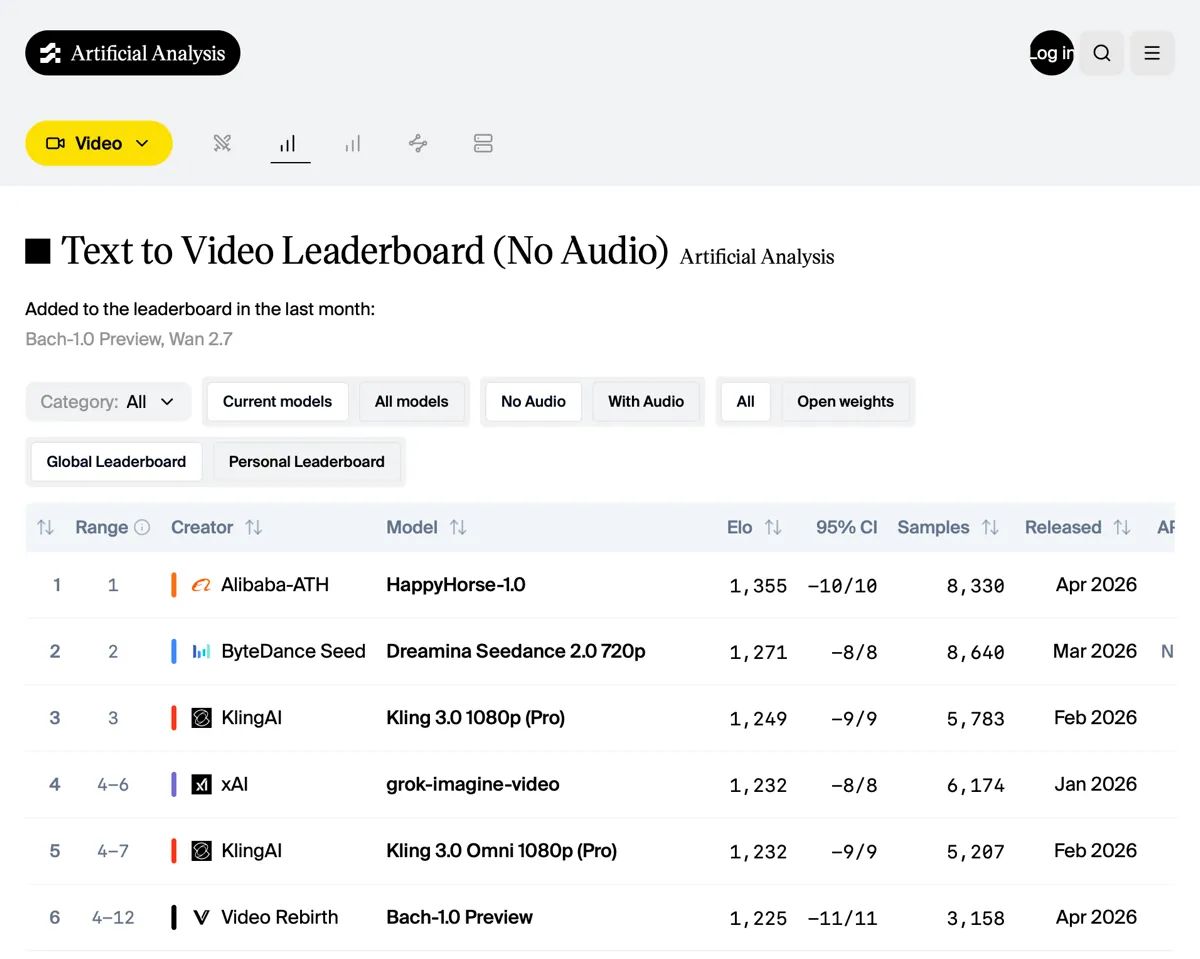
The most honest market ranking is the Artificial Analysis Video Arena, where models compete in blind tests with community voting. The Elo with audio score (May 2026) shows a reshuffle nobody expected:
| Position | Model | Elo with audio | Creator |
|---|---|---|---|
| 1 | Seedance 2.0 | 1220 | ByteDance |
| 2 | HappyHorse | 1218 | (anonymous claim) |
| 3 | Kling 3.0 Omni | 1105 | Kuaishou |
| 4 | Veo 3.1 | 1102 | Google DeepMind |
| 5 | Wan 2.2 (open-source) | ~1080 | Alibaba |
| 6+ | Runway Gen-4.5, Pika 2.5 | 900-980 | Runway, Pika Labs |
Sora 2 is not in the top five - one of the reasons behind OpenAI's decision. The second, according to The Decoder's April 2026 report, is the inference budget: Sora 2 was burning around $1 million per day on compute, and the premium customer base ($200/month Pro) did not cover those costs. OpenAI signals that the successor - tentatively code-named "Spud" in leaks - will focus on B2B and industrial use cases rather than consumers.
In practice the market ranking does not always line up with the arena Elo. The second important indicator is VBench-2.0 (introduced in March 2026, adding physics and commonsense): Wan 2.2 hits 84.7% as the open-source leader, while closed models dominate only in selected categories (motion smoothness, dynamic range). For e-commerce, the critical metrics are: multi-shot consistency (the same product across 6 angles), character preservation (the model does not change a face or body), brand colour accuracy (Burberry check pattern does not turn into something else).

Sora 2 retired - what to do if you used OpenAI
OpenAI announced a two-stage shutdown on 28 January 2026 (confirmed by The Decoder). Timeline:
- 26 April 2026 - the Sora app (web and mobile) stops accepting new generations. Pro subscriptions ($200/month) were refunded automatically pro-rata. The historical clip library is downloadable until the end of July.
- 24 September 2026 - the Sora 2 API is switched off for good. All REST and SDK integrations stop working.
- No successor in 2026 - OpenAI states that "Spud" will arrive in 2027 as a tool for post-production studios, not consumers.
What does this mean in practice for e-commerce? If you have a workflow built on Sora 2 (many UK agencies adopted it after the November launch), you have 5 months to migrate. Three routes:
- Veo 3.1 / 3.1 Lite on Vertex AI - the simplest path for technical teams, with an API compatible with Google Cloud's REST/Python SDK. Lite launched 4 April 2026 at a price 50% below Veo 3.1 Fast.
- Kling 3.0 Omni - the best option for creatively demanding projects (multi-shot, native 4K 60fps), available via API since February 2026.
- Open-source on your own GPU - HunyuanVideo 1.5 (8.3B params) runs on a 14 GB VRAM card (RTX 4080/4090), Wan 2.2 14B requires a larger rig. Ideal for agencies producing 1,000+ clips a month with a tight API budget.
Google AI video generator - Veo 3 and 3.1 quality leader
Google DeepMind launched Veo 3 in May 2025 (3 July 2025 for the UK market), followed by Veo 3.1 in December of the same year. The Veo 3 Tech Report (published on storage.googleapis.com/deepmind-media) confirms an architecture combining a Latent Diffusion Transformer + 3D CNN + two autoencoders (audio + video) generating both streams simultaneously. This is the first model with native audio - not post-synthesis but synchronised dialogue, ambience and music delivered in a single step.
| Feature | Veo 3 | Veo 3.1 | Veo 3.1 Lite |
|---|---|---|---|
| Max clip length | 8 s | 8 s | 8 s |
| Resolution | 720p / 1080p | 720p / 1080p / Upscale to 4K | 720p |
| Native audio (dialogue + SFX) | Yes | Yes | No |
| Image-to-video | Yes | Yes (Ingredients) | Yes |
| Scene Extension | No | Yes | No |
| Camera controls | Yes | Yes (advanced) | No |
| API pricing (Standard, with audio) | $0.40 / s | $0.40 / s | ~$0.07 / s |
| Fast pricing (with audio) | $0.15 / s | $0.15 / s | ~$0.07 / s |
Veo 3 pricing dropped in September 2025 from the original $0.75/s (Standard) to $0.40/s and from $0.40/s (Fast) to $0.15/s - driven by competitive pressure from Kling and Runway. Veo 3.1 Lite, launched on 4 April 2026, is more than 50% cheaper than 3.1 Fast - but it has no audio and no advanced camera controls. Ideal for mass production of B-roll and simple product demos.
Consumer subscriptions Google AI Pro (£15.99/month) and Ultra (£199/month) provide unlimited generations through the Gemini app, but with a "Veo" watermark visible in every plan apart from Ultra in the Flow app. That is a problem for professional e-commerce - if you plan to publish without a watermark, the only options are the API with dedicated billing or the Ultra plan.
Kling 3.0 Omni - Chinese rival with native 4K
Kuaishou (the Chinese company behind the TikTok rival Kuaishou App) released Kling 3.0 Omni on 5 February 2026. It is the first generator with native 4K at 60 FPS and multi-shot support - meaning a single API call generates 6 angles while preserving scene consistency. Clips up to 15 seconds, synchronous audio, pricing:
- Kling 1080p: $13.44/min (about $0.22/s)
- Kling 4K (premier feature): $26-32/min, available only on the Pro Plus plan
- Multi-shot: a single API call generates 6 angles, saving 30-40% versus producing single clips
Kling is the strongest option for projects that need high-quality fashion video - editorial lookbook style and "demo on model" clips. Weaknesses: a 15-second cap (versus Sora 2's 25 seconds before retirement) and a smaller library of reference styles than Veo 3. Geopolitical caveat: if you have customers in the US or Europe with strict compliance policies (financial services, healthcare), using a Chinese API may require additional risk assessment.

Runway Gen-4 and Pika - alternatives for agencies
Runway remains the first choice for creative agencies in the US and UK. Runway Gen-4.5 (launched March 2026) introduced the A2D (audio-to-driving) architecture, Director Mode with 12 camera control parameters and clip lengths up to 10 seconds at 24 fps. Pricing through subscription starts at $15/month (Standard, 625 credits), Pro $35/month, Unlimited $76/month for unconstrained generations in Standard quality.
Pika 2.5 (Pika Labs) is a cheaper option aimed at prosumers: $8-95/month across three tiers. Strong points: fast iteration (clips generated in 30-90 seconds vs 3-5 minutes on Veo), a rich style transfer library, ideal for social media. Weakness: lower quality than Veo/Kling, no native audio until late 2025.
For UK e-commerce the decision usually breaks down into three routes:
- Solo founder / small shop with up to 100 SKUs: Google AI Pro subscription £15.99/month + Veo 3.1 through the Gemini app, enough for occasional needs.
- Mid-size brand 100-1,000 SKUs: Veo 3.1 Fast API + Kling 3.0 Omni for selected premium products. Budget $300-1,500/month.
- Agency / large brand 1,000+ clips/month: a combination of Veo 3.1 API + local open-source (Wan 2.2 or HunyuanVideo) on your own GPUs. ROI break-even at around 3,000 clips per month.
Free AI video generator stack 2026 - LTX-2, HunyuanVideo, Wan 2.2
2025-2026 is the breakthrough period for open-source video AI. If you have searched for "free AI video generator" or "AI video generator free" recently, the open-source stack below is the only honest answer - SaaS free tiers are watermarked or rate-limited. Three models deserve attention:
- LTX-2 Pro (Lightricks, launched 6 January 2026) - the first production-ready open-source model with native 4K, audio and video together. Hosting cost: $2.40-3.60/min on your own GPU; free for companies under $10M ARR. Ideal for e-commerce startups.
- HunyuanVideo 1.5 (Tencent, November 2025) - 8.3 billion parameters, runs on a 14 GB VRAM card (RTX 4080/4090), SOTA on VBench among models below 10B params.
- Wan 2.2 (Alibaba) - 84.7% on VBench, the open-source leader on the quality benchmark, two versions: 14B (requires an A100) and 1.3B (runs on an RTX 3060).
Hardware requirements? An RTX 4090 (24 GB VRAM) is enough for HunyuanVideo and Wan 2.2 1.3B. For full Wan 2.2 14B you need an A100 80 GB or a multi-GPU rig (4 x RTX 4090). Generation time for a 5-second 720p clip: 8-15 minutes on a single GPU vs 30-60 seconds on the Veo API. Do the maths: the API is 30-50x faster but 10-30x more expensive per clip - break-even sits at around 3,000-5,000 clips per month.
E-commerce case studies - who uses AI video in practice

Hard numbers from 2025 and 2026 with named brands:
- Marks & Spencer: shortened product card production from 11 days to 48 hours, cut photography costs by 35%, lifted CTR by 18%, reduced production team travel by 70% (source: McKinsey "State of AI" November 2025).
- Burberry: a $400 million pledge to invest in an AI-first transformation by the end of 2026.
- ASOS: +£99 million in additional revenue in 2025 from rolling out AI-generated PDP videos (industry report Vivideo AI Stats 2026).
- Tesco: +23.7% conversion uplift in tests of AI vs human-generated content (Get-Ryze 2026 case study).
- JD Sports: +50% CTR after deploying AI-generated explainer videos on the product page.
- Boots: +340% revenue, -60% content production cost in the first 6 months of migrating to Veo 3.
On the other side of the spectrum, two cautionary tales:
- Coca-Cola Christmas 2024 - 70,000 clips generated by a 100-person team in 6 weeks, a campaign shredded in the press as "soulless digital slop". Lesson: AI without a creative brief and editorial direction = brand damage.
- Walmart x ChatGPT (February 2026) - the "buy through chat" integration with OpenAI delivered a conversion rate 3x lower than Walmart's own site. Lesson: AI in the buying experience needs a polished flow; text alone is not enough.
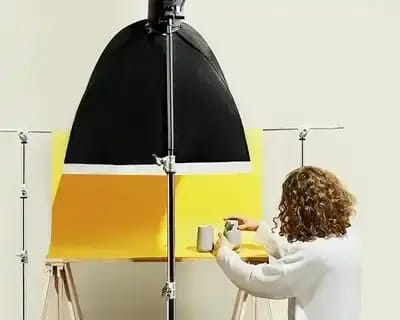
The success pattern is consistent across every growth case study: good source photography (or source clips) + AI as an augmentation layer, not a replacement. At marszalstudio we have been repeating the same message for two years: AI will not write your script, cast your model or set up your lighting, but it can take your 30-second packshot footage and produce 6 variants (different backdrops, different times of day, different camera angles) in 10 minutes. A hybrid workflow always beats pure AI.
EU AI Act, ASA and C2PA - rules from 2 August 2026

The regulatory bombshell for anyone generating AI video: Article 50 of the EU AI Act has applied since 2 August 2026. It sets two obligations: tool providers (e.g. Google, Kuaishou) must mark generated files in a machine-readable format, and whoever publishes a deep fake - realistic material that could be taken for real - must give a "clear and distinguishable disclosure" that it was made with AI. UK exporters into the EU are in scope. Consequences:
- Realistic AI video that viewers could take for real footage (a deep fake under Article 50(4)) must carry a visible AI disclosure - on screen in the clip or in the post description.
- C2PA as the de facto standard - in-file metadata (e.g. C2PA) is one of the ways AI tool providers meet the machine-readable marking duty under Article 50(2). For deep fakes it is not enough: under the Commission's guidelines (para 117) whoever publishes a deep fake cannot rely on metadata, and the disclosure must be visible to viewers. C2PA specifications 2.1, 2.2 and 2.4 are current, alongside the 2025 C2PA white paper and the NSA Cybersecurity Information Sheet from January 2025.
- ASA (Advertising Standards Authority) UK - "There is no blanket legal requirement in the UK to disclose the use of AI in ads" (CAP News, 29 May 2025); the test is whether the audience would be misled without a disclosure. In March 2026 the ASA upheld complaints against a robot-dog toy ad whose scenes appeared to show real and/or AI-generated puppies and made the toy look more lifelike than it is (ASA ruling, 25 March 2026).
- Meta auto-label - Facebook and Instagram have automatically flagged AI content since 2024.
- YouTube and TikTok - both platforms have had disclosure rules since 2024; in July 2025 YouTube tightened monetisation policies for unlabelled AI content.
Practical guidance for UK e-commerce trading into the EU:
- Always switch on SynthID or C2PA Content Credentials at generation time (Veo 3.1 does this by default; Kling and Runway in compliance mode).
- Add a clear disclaimer in the post or product card description: "Part of this content was generated using AI". If the video could pass as real footage, show the note at the start of the clip too: under the Commission's guidelines the disclosure must be visible at the latest at first exposure, and metadata in the file does not count.
- Do NOT generate "realistic photo of {real person} using {your product}" without that person's consent - that is a deepfake and falls under stricter EU rules and UK GDPR.
- Keep an internal generation log (prompt + model + date + timestamp) - it helps if a market surveillance authority in an EU country where you sell asks how you labelled AI content.

AI text to video generator prompts - 10 e-commerce patterns
Most online shops do not need a generic AI text to video generator free tier - they need an AI video generator from image (the packshot you already own) plus a clear prompt. The patterns below are tested on Veo 3.1 and also work in Kling and Runway:
- Hero shot 360 rotation: "Cinematic 360-degree rotation of {product} on white seamless backdrop, soft studio lighting from upper left, slow steady camera movement, no text, no logos, photorealistic Arri Alexa quality"
- Lifestyle moment: "Editorial shot of person hands using {product} in cosy London apartment kitchen, golden hour light through window, scandinavian minimalist interior, no readable text, no people faces"
- Macro detail: "Macro close-up sliding shot of {product material/texture}, shallow depth of field, soft natural light from left window, fine grain"
- Before/after transformation: "Smooth transition from messy desk to organised desk after using {product}, time-lapse style, warm afternoon light, no people"
- Unboxing tease: "Hands carefully opening kraft paper package revealing {product}, overhead view, natural linen surface, dried flowers nearby, kinfolk magazine aesthetic"
- Product in use: "First-person POV of using {product} in real-world scenario, GoPro-style stabilised footage, natural daylight, no faces, focus on the product action"
- Comparison split-screen: "Vertical split-screen comparing {product A} vs {product B}, neutral grey background, cinematic studio lighting"
- Texture macro: "Slow macro pan across {fabric/material} of {product}, shallow depth, soft side light, photorealistic detail"
- Brand moodboard: "Editorial flat lay of {product} surrounded by natural elements (linen, dried flowers, wood) on neutral surface, top-down view, golden hour light"
- Ambient seasonal: "Cosy autumn morning shot of {product} on wooden cafe table, blurred steaming coffee mug nearby, soft window light, warm earth tones"
Three rules you must never break: NO TEXT NO WORDS NO LETTERS in the prompt (models hallucinate captions that come out unreadable and look terrible), no real-people faces without consent (legal risk + uncanny valley), no specific competitor brands in the prompt (it skews the model's "brand bias" and may breach IP).
2026 pricing - 8-tool comparison table

| Tool | Price per minute of video | Starter plan | Audio | 4K |
|---|---|---|---|---|
| Krea Realtime | $1.50/min | $15/month | No | No |
| LTX-2 Pro (open-source self-hosted) | $2.40-3.60/min | Free under $10M ARR | Yes | Yes |
| Pika 2.5 | $3-8/min | $8/month | No | No |
| Veo 3.1 Lite | ~$4.20/min | API pay-per-use | No | No |
| Veo 3.1 Fast (with audio) | $9/min | API pay-per-use | Yes | No (upscale) |
| Runway Gen-4.5 | ~$10-15/min | $15/month | Yes | No |
| Kling 3.0 Omni 1080p | $13.44/min | API pay-per-use | Yes | Yes |
| Seedance 2.0 | $8.40/min ($0.14/s) | API pay-per-use | Yes | Yes |
| Veo 3.1 Standard (with audio) | $24/min | API pay-per-use | Yes | No (upscale) |
| Veo 2 (legacy) | $30/min | API pay-per-use | Yes | No |
The 20x spread ($1.50 vs $30/min) reflects differences in quality and feature sets. For typical e-commerce, the sweet spot is Veo 3.1 Fast ($9/min, audio, good quality) or Kling 3.0 Omni 1080p ($13.44/min, multi-shot, native 4K via upscale). Open-source LTX-2 Pro is the best option for startups with a technical team - free below $10M ARR.
Hybrid workflow - how we run AI video at marszalstudio

Our internal pipeline blends a classical product shoot with AI augmentation:
- Product shoot - a classical packshot with a Sony A6400/Fuji X-T5, a minimum of 8 key angles under different lighting conditions. This is the "source of truth" - we never skip it.
- Text storyboard - 6-8 prompts describing the clips to generate. Each prompt covers: shot type, camera type (Arri Alexa Mini LF), light, mood, colour palette, NO people and NO text.
- Batch generation in Nano Banana Pro for reference images + Veo 3.1 Fast for clips. Average price: $0.07-0.15 per image, $9 per 60 seconds of video. For a typical product card (4 clips x 5 s) that comes to roughly $3.
- Editing in DaVinci Resolve - splicing clips, colour grading, adding disclosure captions (compliance with EU AI Act Article 50 and the ASA CAP Code), optional voiceover audio.
- Export to platforms: 9:16 for TikTok and Reels, 16:9 for YouTube and Shopify, 1:1 for Instagram feed. Plus C2PA metadata embedded.
- Compliance check: every clip gets an "AI-augmented" tag in our internal log, which lets us reconstruct production in case of an audit.
The whole process from brief to a finished package of clips for 10 products takes 2 working days instead of the 10-14 days a classical production would need. The cost is 60-70% lower while keeping a coherent brand image - because the source is always our studio shoot, with AI only scaling the output. If you want to see this in practice, our team offers an "AI product photography + video starter pack" - with ready storyboards and full EU and UK compliance. The pack is priced individually.

According to the independent Artificial Analysis ranking (May 2026), the Elo-with-audio leaderboard is led by Seedance 2.0 (1220), followed by HappyHorse (1218), Kling 3.0 Omni (1105) and Veo 3.1 (1102). Among commercial models with strong API availability and English language support, the most popular is Google Veo 3.1, which launched in the UK on 3 July 2025. OpenAI's Sora 2 is being shut down - the consumer app ends on 26 April 2026 and the API on 24 September 2026.
After the September 2025 cut the Veo API price list is: Standard with audio $0.40/second ($24/min), Standard without audio $0.20/s, Fast with audio $0.15/s ($9/min), Fast without audio $0.10/s. Veo 3.1 Lite, launched on 4 April 2026, is more than 50% cheaper than Veo 3.1 Fast. Consumer subscriptions: Google AI Pro £15.99/month, Google AI Ultra £199/month (the only plan without a "Veo" watermark in the Flow app).
OpenAI announced a two-stage shutdown of Sora 2 in January 2026: the consumer app ends on 26 April 2026 and the API on 24 September 2026. The main reasons are the high inference cost (Sora 2 was burning around $1 million a day on compute), a slipping position in independent benchmarks (Sora 2 is not in the top 5 of the Artificial Analysis Arena) and a strategic decision to redirect resources to the "Spud" model - a successor aimed at B2B and industrial use cases rather than consumers. Pro subscriptions ($200/month) will be refunded pro-rata.
Yes, if the video is realistic and could be taken for real footage (a deep fake under Article 50(4) of the EU AI Act) - this also applies to UK businesses selling into the EU. Since 2 August 2026 you must then clearly disclose that it was made with AI, at the latest at first exposure: as on-screen text at the start of the clip, and ideally also in the post or product card description, e.g. "Part of this content was generated using AI". C2PA metadata alone is not enough under the European Commission's guidelines. Tool providers must also mark files in a machine-readable format; Veo 3.1 and Nano Banana Pro switch on SynthID and C2PA by default. In the UK there is no blanket duty to label AI in ads, but the CAP Code bans misleading ads, and in March 2026 the ASA upheld complaints against a toy ad whose real and/or AI-generated puppies made the product look more lifelike. Meta automatically labels such content.
For a typical product card with 4 clips of 5 seconds each on Veo 3.1 Fast, the cost is around $3 gross (0.15 USD/second x 20 seconds). For a 10-product pack, around $30. Krea Realtime is the cheapest ($1.50/min, no audio or 4K), Kling 3.0 Omni with 4K and multi-shot support costs $13.44/min, Veo 3.1 Standard with full audio - $24/min. Open-source LTX-2 Pro is free for companies under $10M ARR (only the cost of your own GPU).
Veo 3.1 wins for most UK shops: better English language support in prompts, integration with Vertex AI and the Gemini API, lower price (Fast $9/min vs Kling $13.44/min) and EU/UK compliance with C2PA. Kling 3.0 Omni is stronger for fashion video - native 4K, multi-shot generates 6 angles in a single call, longer 15-second clips. Geopolitical aspect: Kling is the Chinese company Kuaishou, which can be a deal-breaker for some clients (financial services, healthcare, US-based brands). The compromise: use Veo 3.1 as default and reach for Kling 3.0 on premium fashion video where 4K and multi-shot deliver a clear advantage.
The break-even point is around 3,000-5,000 clips a month. Below that the API (Veo 3.1 Fast or Kling) is cheaper and faster (a clip is generated in 60-90 seconds vs 8-15 minutes on your own GPU). Above 5,000 clips a month it is worth considering HunyuanVideo 1.5 (runs on an RTX 4080/4090 with 14 GB VRAM) or LTX-2 Pro (free for companies under $10M ARR). Wan 2.2 14B requires an A100 80 GB or a multi-GPU rig. Remember the running costs: electricity, cooling, devops - for an agency producing 1,000-3,000 clips a month, a mix of API + occasional self-hosting for batch jobs is optimal.
Coca-Cola produced 70,000 AI clips with a 100-person team in 6 weeks for the Christmas 2024 campaign. The press shredded the campaign as "soulless digital slop" - generic visualisations without character or emotion. The lesson worth taking on board before deploying AI video: technology without a creative brief, storyboard or editorial direction churns out a mass of clips but does not build brand value. By contrast, Marks & Spencer hit +18% CTR and -35% photography costs through a hybrid workflow: a classical product shoot + AI as an augmentation layer, not a replacement. The success pattern is clear - the source is always good base photography, AI scales but does not create something out of nothing.
Summary - how to start with AI video in 2026
May 2026 is a good time to enter AI video generator workflows for e-commerce - Sora 2 is out of the running (the app ends 26 April, API 24 September), Veo 3.1 is the stable leader at $9/min (Fast), Kling 3.0 Omni delivers native 4K at $13.44/min, and open-source LTX-2 Pro is free for startups under $10M USD revenue. For a typical UK shop with 100-1,000 SKUs we recommend: a Google AI Pro subscription at £15.99/month for testing + the Veo 3.1 Fast API for production. For agencies - a combination of Veo + Kling + local open-source for volumes above 3,000 clips/month.
Remember three things: EU AI Act Article 50 has applied since 2 August 2026 and requires labelling of realistic AI content that could pass as real (on-screen text in the clip or a "Part of this content was generated using AI" disclaimer); the hybrid workflow always beats pure AI (the Coca-Cola case shows why); good source photography is the foundation - AI scales it but does not replace a studio shoot with a real product. If you want to skip the trial-and-error stage, at marszalstudio we run a hybrid pipeline from brief to a finished pack of clips - with C2PA, EU AI Act compliance and story-driven content at the ASOS level, not the Coca-Cola one.
Further reading: AI image generator - Midjourney, Firefly, DALL-E | Gemini AI for product photo editing | EU AI Act for product photography 2026 | AI pack - product photos and video | AI image generator - tools overview