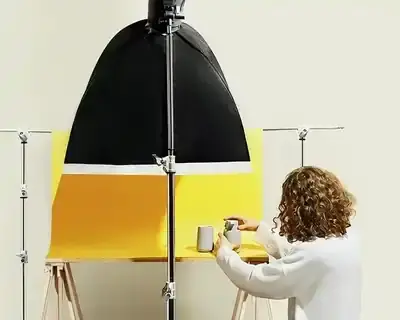
The best DSLR camera for beginners in 2026 is, in practice, the Canon EOS 2000D. On 29 October 2026 it was the only new DSLR kit under £600 at Currys, Jessops, Wex and Amazon UK (sold by Amazon itself): from £530 with an 18-55 mm lens. A new Nikon D7500 kit costs £1,289 at Nikon UK, and the Canon EOS R100 mirrorless costs about £140 more than the 2000D.
Below you will find which entry-level DSLRs are still sold new, whether DSLRs are still being made and when mirrorless is the better buy. We checked and dated every price ourselves.

Which DSLRs Can You Still Buy New in 2026?
On 29 October 2026 we checked Currys, Jessops, Wex, the Nikon UK store and Amazon UK (only offers sold by Amazon) for the price of a new camera with its kit lens.
| Model | Type | Sold new at (29.10.2026) | Price with kit lens |
|---|---|---|---|
| Canon EOS 2000D | DSLR, 24.1 MP, Full HD | Currys, Jessops, Amazon (Wex: kit awaiting stock) | £530-585 |
| Canon EOS 250D | DSLR, 4K, vari-angle screen | only an Amazon marketplace seller | £459 (marketplace only) |
| Canon EOS 4000D | DSLR | none (one Amazon marketplace listing, no stock) | none |
| Nikon D5600 | DSLR, vari-angle touch screen | none, not in the Nikon UK store | none |
| Nikon D7500 | DSLR, 20.9 MP, 4K | Nikon UK store | £1,289, body £1,049 |
| Pentax KF | DSLR, K series ending | Amazon, Wex (special order) | £900, body £764 |
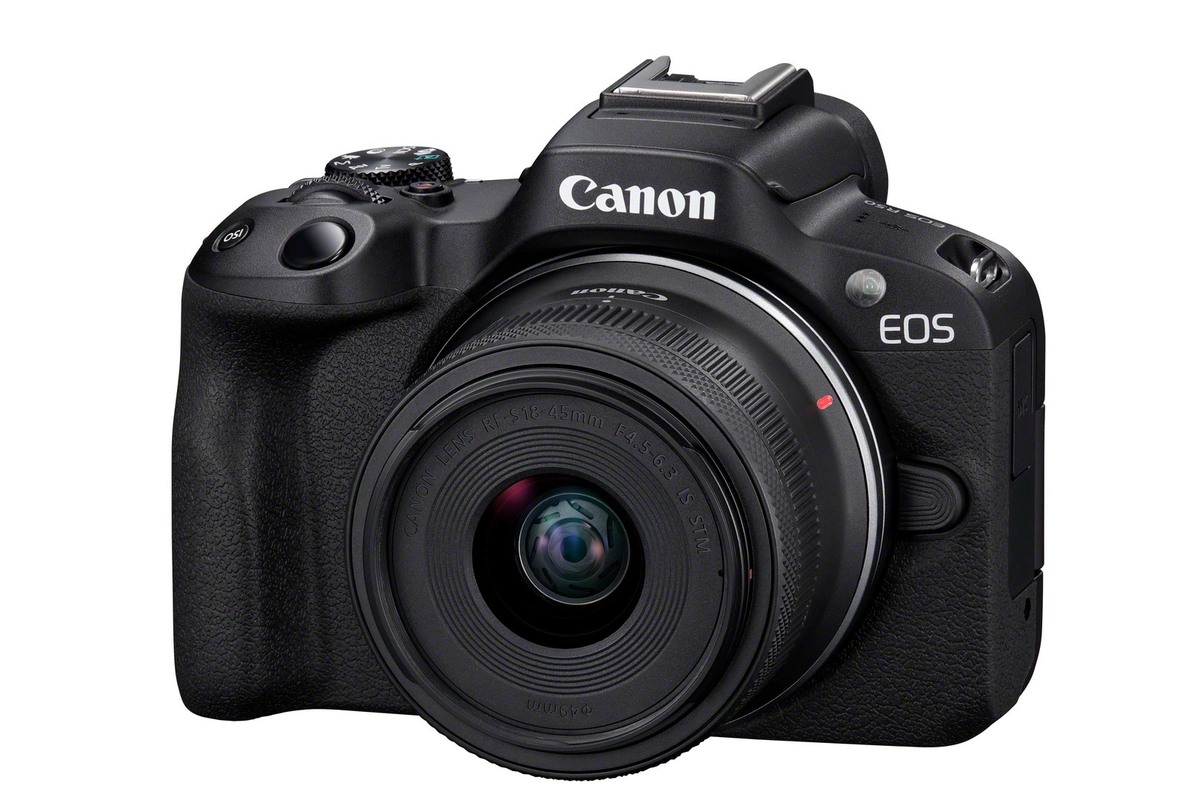
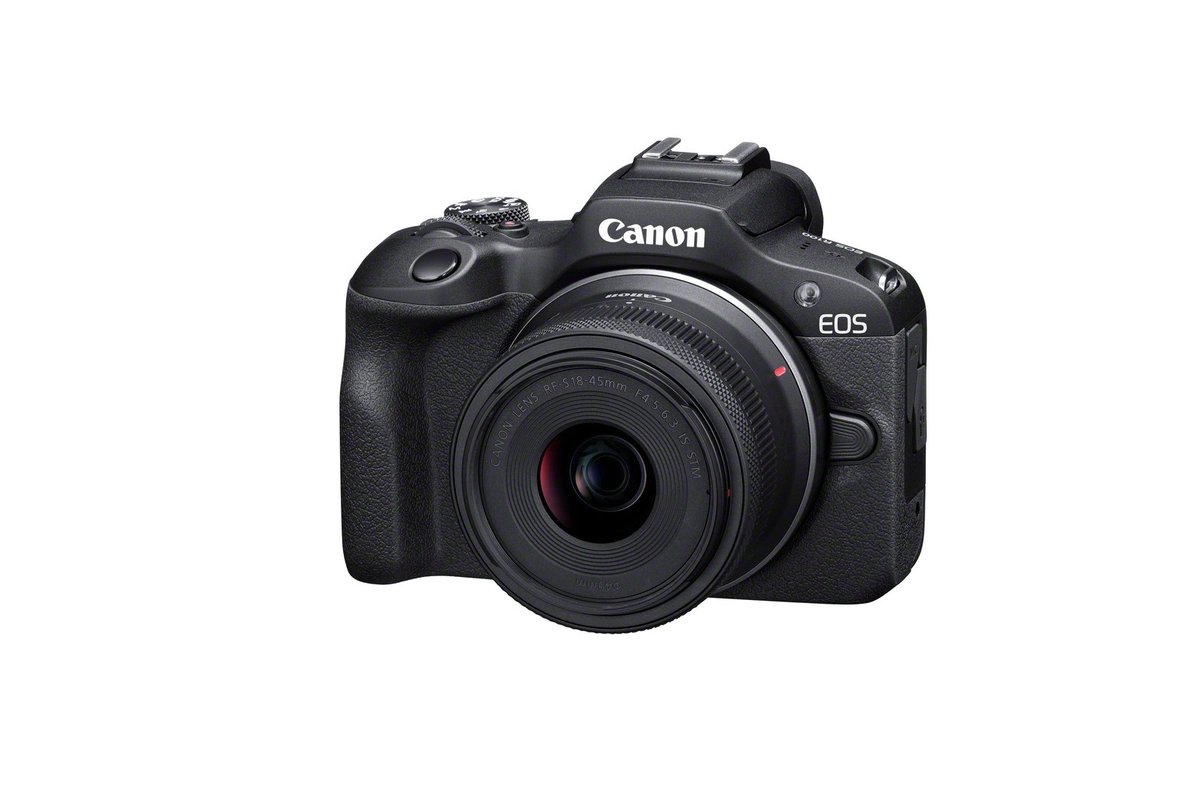
| Canon EOS R100 | mirrorless, 4K | Currys, Jessops, Amazon | £669-720 |
| Canon EOS R50 | mirrorless, 4K, vari-angle screen | Currys, Jessops, Amazon | £719-900 |

- Same camera, different lens. With the EF-S 18-55 mm III lens the 2000D cost £529.99 at Currys and Amazon, with the stabilised IS II £585 at Jessops. The 2000D has no stabiliser in the body, so look for IS in the lens name.
- Marketplace sellers: cheaper, riskier. On Amazon they listed the 2000D kit from £327 and the 250D kit at £459. Check the seller and the warranty first.
- The D7500 comes mainly from Nikon. Currys, Jessops and Wex did not list it, and the Nikon UK listing said “Charger not included”.
- Used: a 2000D body from £209 at Wex, a Nikon D7200 body for £395 at Jessops.
Are DSLRs Still Being Made?
Canon and Nikon have not launched a new DSLR since 2020. Older models are still sold new, including the full-frame Nikon D780 (body £1,999) at Jessops and the Canon EOS-1D X Mark III at Wex.
- Canon: according to the Canon Camera Museum, its last new DSLR, the EOS 850D, went on sale in Japan in June 2020. The 2000D dates from March 2018 and the 250D from April 2019.
- Nikon: its last DSLRs, the D780 and D6, were announced in early 2020, and its news releases from 2021-2026 show no new one. The D7500 dates from 2017.
- Pentax (Ricoh): on 9 September 2026 it announced the end of production of the current K series DSLRs and plans for a new DSLR series, with no date yet.

For a beginner this matters less than it sounds: the camera takes the same photos as on launch day, and you learn exposure on it just as well. Upgrading is the weak point, so your next, better camera will probably be mirrorless.

What Is a DSLR Camera and How Does It Work?
A DSLR (digital single-lens reflex, or digital SLR) camera has a moving mirror behind the lens. It reflects the image up through a prism or a set of mirrors into the optical viewfinder, so you see the scene through the lens itself, not on a screen. When you press the shutter button, the mirror flips up, the shutter opens and light reaches the sensor.

A mirrorless camera has no mirror: the image from the sensor goes straight to the screen or an electronic viewfinder. That makes it smaller, but it uses the battery faster. Both types take interchangeable lenses: a wide angle for interiors, a telephoto for wildlife, a macro lens for jewellery and other close-up product photography.

All the cameras recommended here have an APS-C sensor (Nikon: DX), smaller than a full-frame sensor and a sensible size for a first camera.
DSLR for Beginners: Pros and Cons
Advantages:
- Battery: Canon rates the 2000D at about 500 shots per charge and the 250D at about 1,070, the R100 mirrorless at 340-430. Nikon rates the D7500 at up to about 950.
- Optical viewfinder: you see the scene with no lag and no glare on a screen, even in bright sun.
- Full control: you set the exposure yourself (aperture, shutter speed and ISO) and the white balance, and the APS-C sensor gives you more control over depth of field than a phone.
- Accessories: interchangeable lenses, flashguns, tripods and filters, many of them second-hand.

Disadvantages:
- Autofocus on the screen: through the viewfinder the 2000D focuses with 9 AF points, but in live view on the screen it uses contrast detection, which is slower. The 250D and R100 have the faster Dual Pixel CMOS AF.
- Video: the 2000D records Full HD at up to 30 fps. For 4K in a DSLR you need the 250D or the D7500.
- Weight: with battery and card the 2000D weighs about 475 g, the 250D about 449 g and the D7500 about 720 g, and the R100 mirrorless about 356 g.
DSLR Camera for Beginners: What to Check

Before you buy, check these in order:
- Budget with a lens: price the kit with an 18-55 mm lens, plus an SD card and a bag.
- Size and weight: a camera that stays at home because it is heavy teaches you nothing.
- Resolution: 20-24 MP is plenty for prints and an online shop; more mostly means bigger files.
- Features: a vari-angle screen (250D, D5600) or tilting screen (D7500), 4K, Wi-Fi for sending photos to your phone. Don’t pay for features you won’t use.
- Lenses for later: check whether a fast 50 mm prime and a macro lens for that mount fit your budget.
- Reviews: look for sample photos in low light, not star ratings.
- Try it in a shop: see how the camera sits in your hand, whether the menu makes sense and how quickly it focuses.
- Buying used: ask for the shutter count and buy with a receipt or from a shop that gives a warranty.

Pro tip: for product photos, put the DSLR on a tripod and fire it from your phone. The 2000D works with the Canon Camera Connect app over Wi-Fi and NFC, so you won’t shake the camera by pressing the button.
The Best DSLR Camera for Beginners: 3 Options
Three realistic choices for a starter DSLR camera: a cheap Canon, a Canon with a vari-angle screen if you find one, and a Nikon for more demanding users.
Canon EOS 2000D: the Cheapest New DSLR
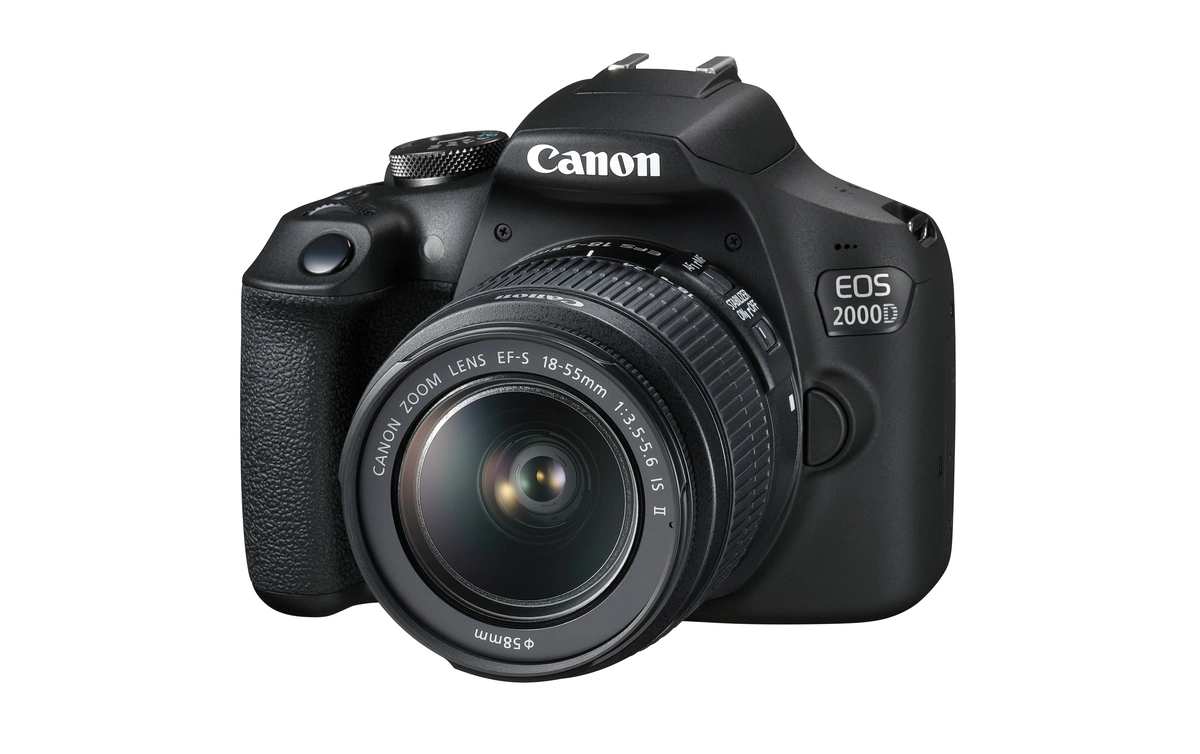
The Canon EOS 2000D (Rebel T7 in the US) has a 24.1 MP APS-C sensor, 9 AF points in the viewfinder, Full HD video and Wi-Fi with NFC. With an 18-55 mm lens it cost £530-585 on 29.10.2026, and the body alone £429-479. It is a good camera for learning exposure, but weaker for video and fast action.

Canon EOS 250D and 4000D: If You Can Find One
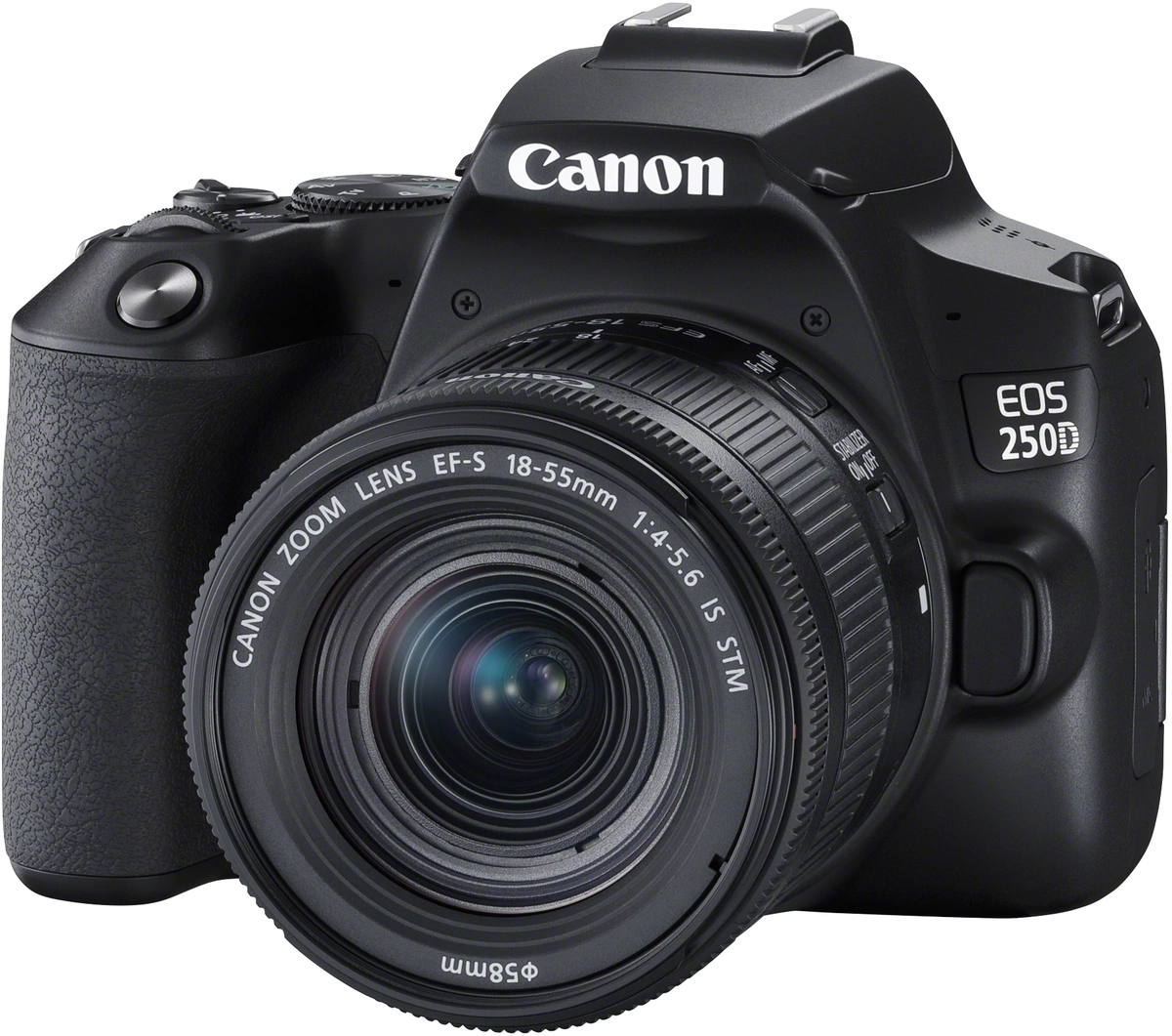
The Canon EOS 250D is small and light, about 449 g, with a vari-angle screen, 4K and Dual Pixel CMOS AF, but in the UK only an Amazon marketplace seller offered it, and the EOS 4000D has gone from UK shops. If you find either, compare it with a new 2000D.

Nikon D7500, D5600 and D5300
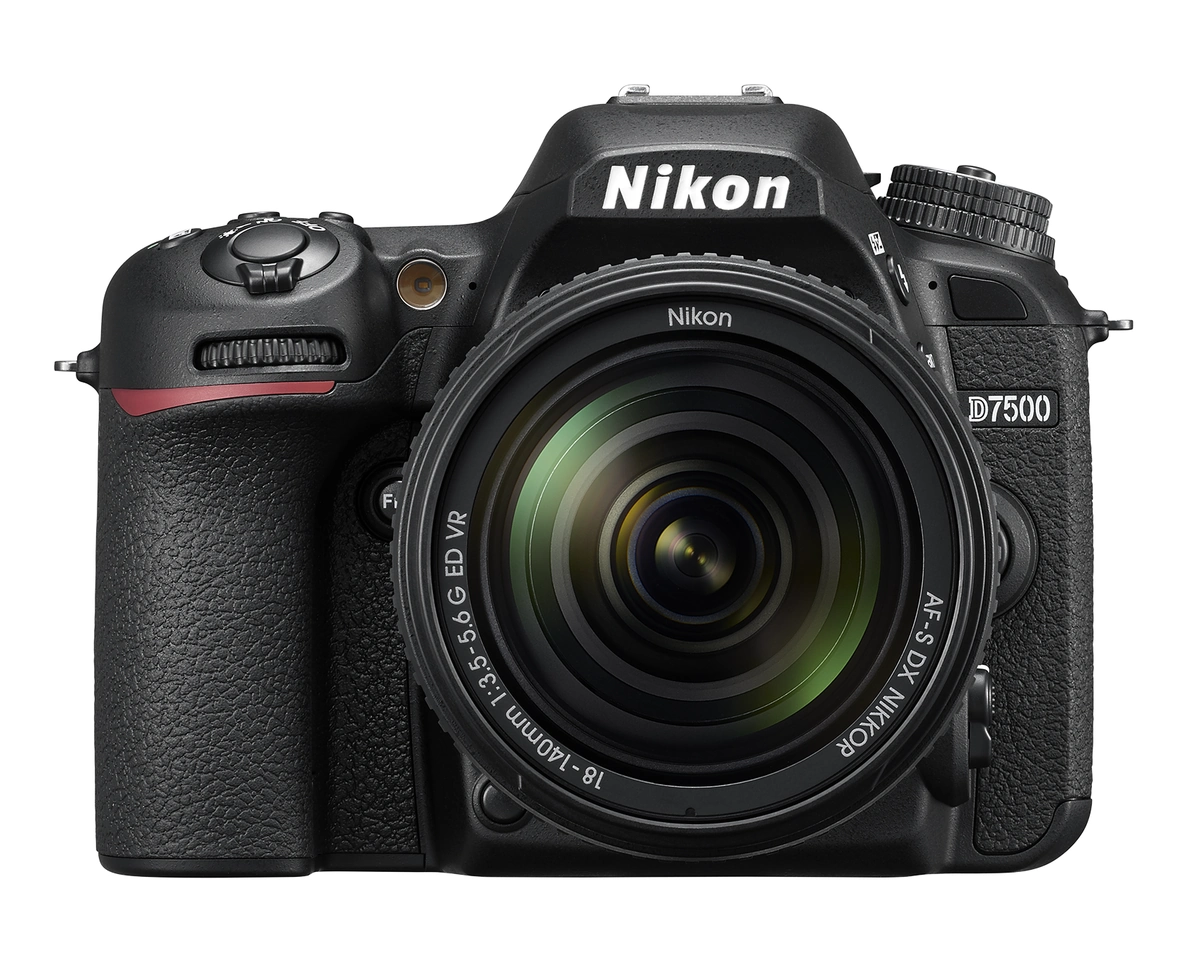
The Nikon D7500 is the only APS-C Nikon DSLR still sold new in the UK: 20.9 MP, 51 AF points, 8 frames per second and 4K. The body cost £1,049 at the Nikon UK store, the kit with an 18-140 mm lens £1,289. It is the pick for sport, wildlife or children on the move. The D5600 and the D5300 below are no longer sold new by the shops we checked.

Basic Accessories
- Lens: the kit zoom (a lens with a variable focal length) is enough at first. Make the second a fast 50 mm f/1.8 prime.
- Camera bag: protects the DSLR from dust, rain and knocks.
- Memory cards: choose a fast SD card, especially if you shoot 4K.
- Spare battery: useful on trips and for video.
- Tripod: for long exposures, product shots and sharp photos in low light.
- Filters: a polarising filter cuts reflections, and a UV filter protects the front element.
Accessories in Product Photography: Examples
- Polarising filter for jewellery: cuts glare on glass and gemstones, but not on bare metal, so shape those reflections with light (see how to photograph jewellery).
- Macro lens in cosmetics photography: shows the texture of a cream close up.
- Diffuser in food photography: soft, even light without hard shadows.
- Lights and backdrops in clothing photography: a neutral backdrop keeps attention on the product, and side light shows the fabric.
So Which DSLR Camera for Beginners?
- Up to about £600, learning photography: the Canon EOS 2000D with an 18-55 mm lens, ideally the IS II version.
- Photos and video, vlogging too: the mirrorless Canon EOS R50 from £719 with a vari-angle screen; for video alone the R100 from £669 with 4K. The 250D is the DSLR option, if you find one.
- Sport, wildlife, children on the move, budget about £1,300: the Nikon D7500 with an 18-140 mm lens.
- A system for years: a mirrorless camera, compared below and in our guide to the best mirrorless cameras.
Any beginner DSLR here will do for product photography: the product stays still, so 9 AF points are enough. For specific models, see our guide to the best camera for product photography.

If the camera is only for photos for your online shop, consider the other route too: a packshot on a white background at marszalstudio costs €9 net per photo without retouching (see pricing), with no lights to buy and nothing to learn.
DSLR vs Mirrorless in 2026
Canon’s two cheapest new cameras with a lens, the 2000D DSLR and the R100 mirrorless (manufacturer data, UK prices 29.10.2026):
| Feature | Canon EOS 2000D DSLR | Canon EOS R100 mirrorless |
|---|---|---|
| Price with kit lens | £530-585 | £669-720 |
| Battery | about 500 shots | about 340 through the viewfinder, 430 on the screen |
| Viewfinder | optical | electronic OLED |
| Weight with battery and card | about 475 g | about 356 g |
| Autofocus | 9 points in the viewfinder, slower on the screen | Dual Pixel CMOS AF with face and eye detection |
| Video | Full HD, 30 fps | 4K, 25 fps (contrast AF in 4K) |
Both are enough to learn photography. The DSLR wins on battery and viewfinder, the mirrorless on autofocus, video and weight. If you also want to shoot video, the R100 is worth the extra £140.
Frequently Asked Questions
-
Is a DSLR still worth buying in 2026?
Yes, for learning photography. A new Canon EOS 2000D kit cost from £530 in UK shops on 29.10.2026. The downside: Canon and Nikon have launched no new DSLR since 2020.
-
Why are DSLRs being phased out?
Canon and Nikon have launched no new DSLR since 2020, and their new interchangeable-lens cameras are mirrorless. Ricoh is ending the current Pentax K series but plans a new DSLR series.
-
What is the best DSLR for beginners?
Usually the Canon EOS 2000D with an 18-55 mm lens, from £530 and the only new DSLR kit under £600 in UK shops on 29.10.2026. For 4K, look at the Nikon D7500.
-
Should a beginner use a DSLR or mirrorless?
For photos alone a DSLR is enough, and its battery lasts longer. For video, mirrorless is better: the Canon EOS R100 from £669 has 4K and eye detection. For vlogging, choose the R50.
-
Is Canon or Nikon better for beginners?
Neither is clearly better to start with. Canon has the cheapest new DSLR, the 2000D, and Nikon still sells a new D7500 for more demanding users. Pick the one that fits your hand.
-
What three lenses should a beginner have?
Start with the kit lens, usually 18-55 mm. Make the second a fast 50 mm f/1.8 prime: it blurs the background more and teaches you aperture. For product photos, add a macro lens.
-
Is a DSLR good for product photography?
Yes. The product stays still and the camera sits on a tripod at ISO 100, so the body matters less than light, background and lens. Good lighting does more than a pricier camera.